New Year's address
January 1, 2025
The President delivers her New Year’s address at Bessastaðir.


The President of Iceland delivered her first New Year’s address at Bessastaðir today. The address was broadcast on RÚV and on the President’s Facebook page. The text of the address is available here in English translation and can be read here in full:
***
My dear fellow-Icelanders I wish you all a Happy New Year!
New Year’s Day is a day of hope and of good resolutions, a day of new beginnings where all is young and alive, when we think of the future with high hopes – and of the past with affection. It is a new day rooted in the past – a little like the Icelandic nation, which has a long history, yet is young among the community of autonomous nations. On the one hand, the Icelandic national character is like a youngster who is still developing and coming into being, its mind teeming with diverse ideas. On the other hand, the nation has centuries of experience to draw upon.
I often think how fortunate I am to be part of this nation, which in spite of its small size dares to think big and progressively – sets high standards for itself and others, and boasts such abundant creativity that the possibilties seem endless.
My husband Björn and I thank you, people of Iceland, for the confidence you have placed in us. We are grateful to all those well-wishers who have met us with warmth and smoothed our path over the past year, sent us greetings, and invited us to events all around the country. I especially want to thank the youngsters and children whom I regularly encounter when I am out and about, who ask for a hug. You melt my heart and Björn’s, and every day we are thinking how best to ensure you a good future.
We can all learn lessons from each other, and it is of great value to be able to confer and compare, not least with our neighbouring nations who share our values – and especially the other Nordics. In October my husband and I were honoured to make our first official visit, to King Frederik X and Queen Mary of Denmark. The histories of our two nations have been intertwined in so many ways over the centuries, and the bond between us extends far beyond the political sphere. We have much to learn from the Danes, not least how to be supportive of creativity and innovative thinking in many sectors of society.
A telling example of successful Nordic collaboration is that for 25 years the Nordic nations have run all their embassies in Germany under one roof. That landmark was celebrated in Berlin in October, with the focus on the importance of reinforcing yet further the relationship among these nations, who are all “family.” In this the Nordic Council, founded shortly after World War II, has played a crucial role. Last year Iceland held the presidency of the Nordic Council, and the Session of the Council was held here in Iceland in October. Ukrainian president Volodymyr Zelenskyy was the guest of the Nordic Council Session, and I received him at Bessastaðir. It was an enlightening experience to have the opportunity to speak with a man who has been fighting for more than a thousand days for the life and survival of his nation.
These are hazardous times in the world. We are a peaceful nation, and as a rule we can look on from afar, hoping that conflict will pass us by. “My home, my home and yours, sleeps happily in peace,” wrote poet Jakobína Sigurðardóttir (1918-94) in her poem Vökuró, which was beautifully set to music by Jórunn Viðar, and later sung by Björk. “Far away looms the big world outside, crazed with grim witchery.” But such “crazed” forces may not be so far away; and we must rely upon ourselves and others to keep them at bay. It is a question worth asking, how Icelanders can best support and uphold peace on earth when conflict threatens.
Here in Iceland we have to confront terrifying forces with which no negotiations are possible: the volcanic eruptions on the Reykjanes peninsula – a prolonged ordeal unprecedented in recent centuries. I urge all Icelanders to watch the TV series Grindavík, which explores the experiences of the people of Grindavík as their town was laid waste by volcanic activity, and how they found unity in supporting the town’s champion basketball teams. The adversities faced by the people in Grindavík put our everyday challenges in perspective.
Other major issues face us, both here in Iceland and abroad, such as increasing unhappiness, loneliness and violence. We must respond to these challenges, united in support of what is important to all of us: a healthy society where everyone can prosper. The song that was played before this address was composed for Icelandic Language Day, 16 November, by two young schoolgirls in Hofsós, north Iceland. Their names are Dagmar Helga and Valgerður Rakel, and their song is Knights of Love . The girls call upon us to be knights of love: “Be the sun for those who cannot see the light.”
Icelanders are familiar with both the darkness of deep valleys and the midnight sun. To my mind, our greatest strength lies in the fact that we all pull together in times of need. Our society abounds in examples of knights of love, volunteers who selflessly contribute for the good of others: our search-andrescue teams, women’s organizations, the sports sector and all the many charities, to name but a few. Last year the Icelandic Red Cross marked its centenary: a hundred years of humanitarian work, by tens of thousands of volunteers. We are grateful, and proud of these standard-bearers.
Last year Icelanders found themselves unexpectedly among the nations holding general elections: 2024 was a record year for elections around the world. Following our election in November a new government has taken office, and I wish them good fortune in their work for Iceland and its people.
For the first time in Icelandic history, all three parties that sat down together to negotiate the formation of a coalition government are led by women. I see this as a step towards equality, in a field where women have generally been at a disadvantage over the years. Increased diversity of role models is important, and rising numbers of female leaders in all fields of national life make a difference. In politics, as elsewhere, we need more kindness and humanity in our attitudes and our quest for solutions. Though such qualities are often associated with women leaders, they transcend gender, and must be promoted – also among boys and men.
Iceland boasts standard-bearers in many fields – in the sciences, arts, sports and business. To mention but a few examples: Víkingur Heiðar Ólafsson has established himself as one of the world’s leading pianists, while the young Laufey Lín Jónsdóttir has garnered an international following for her music, and won a Grammy award.
Last autumn architect Arnhildur Pálmadóttir won the Nordic Council Environment Prize for her interdisciplinary interest and focus on reducing CO2 emissions and increasing circularity in the building industry. And the Össur prosthetics company was selected last year by TIME magazine as one of the world’s best companies in sustainable growth.
In addition I want to mention our outstanding athletes, and especially those who represented Iceland in Paris this year at the Olympics, and at the Paralympics, which I attended in August with my husband. It was uplifting to observe the extraordinary courage, stamina and focus exhibited by all the competitors.
On behalf of my husband and myself I also want to express our thanks for all the art exhibitions, theatrical performances, films and concerts we have had the opportunity to enjoy in the past few months. That experience has shown us that art is the way – for it opens up our hearts and minds.
It is eloquent of our abundance that I have mentioned here only a handful of examples of Icelanders’ achievements at home and abroad. We take pride in such achievements in all fields of society; and they inspire us and spur us on.
Though more than eleven hundred years have passed since Iceland was settled in the middle ages, our modern republic is only eighty years old – an eighty-year-old youngster with grand dreams. The oldest generations of Icelanders alive today still recall the glory of the foundation of the Republic of Iceland, and the period of development and growth that followed. They lived through an era when the nation’s infrastructure had to be built up, some of it from scratch: the economy, educational system, healthcare services, transportation, finance, as well as cultural bodies such as theatres, orchestras and museums. Those generations had grand dreams for the future, and they buckled down to make them come true. We owe them a great debt of gratitude, and we should learn from their experience. And we too should permit ourselves grand dreams of what we want to do in the next eighty years, in order to establish the society we wish to provide for our children and grandchildren.
At the end of last year we bade farewell, after a long and fruitful life, to one of those who was a young man when the Republic of Iceland was founded: composer Jón Nordal, former principal of the Reykjavík College of Music. He leaves behind a diverse musical oeuvre which places him among Iceland’s leading composers of the 20th century. Among his works, both large and small, shines a little jewel of a song, familiar to all Icelanders – a setting of a poem by beloved 19th-century Romantic poet Jónas Hallgrímsson: “Smávinir fagrir, foldarskart” (Fair little friends, jewels of the field ). Surely it must have been sung by every choir in Iceland. I have sung it myself in a choir, but it was only recently that I realised that Jón Nordal had composed the song when he was only fourteen years old. As he sat at the dining table of his home with a copy of Jónas Hallgrímsson’s Lay of Hulda, this treasure of Icelandic music sprang to the youngster’s mind fully-formed, just a few years before the Republic of Iceland was founded.
Kofi Annan, former Secretary General of the United Nations, once observed: “You are never too young to lead and never too old to learn.” And we Icelanders should make those words our own. We are a venerable nation that is eager to learn, and a youngster who yearns to undertake responsibility. We have a unique history and language, which encompasses the whole world in its words; and it is up to us to continue to shape it, guided by our creative powers.
My dear fellow-Icelanders. Let us permit creativity to lead us onward; let us support it, and strengthen and boost our courage so that we may have a positive influence – each in our own way – wherever we can. To return to the song Knights of Love: let us also nurture those who lack courage, for we will all benefit by living in a caring, tolerant society. Let us choose our words, and deeds, well. Each of us is a role model to someone, and the more of us that choose to be knights of love, the brighter our future will be.
Björn and I, and our family, reiterate our thanks for our warm and kind reception by the nation. We hope that the year ahead will bring joy and good fortune to us all.
Let us be “the sun for those who cannot see the light”!
Other news

October 12, 2026
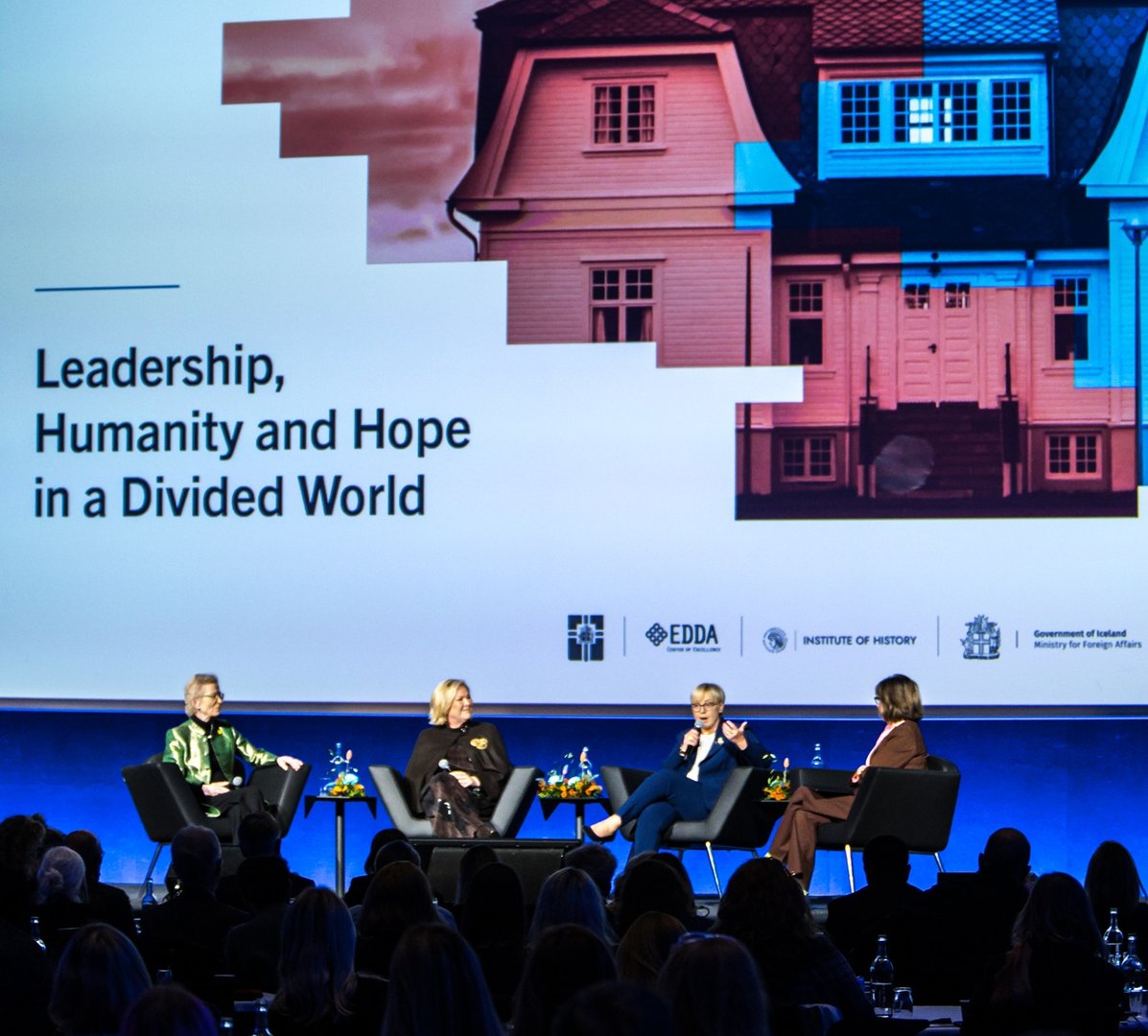
“Imagine is a wonderful word”
A conversation among women leaders at the Imagine Forum.
October 12, 2026
“Imagine is a wonderful word”

October 12, 2026
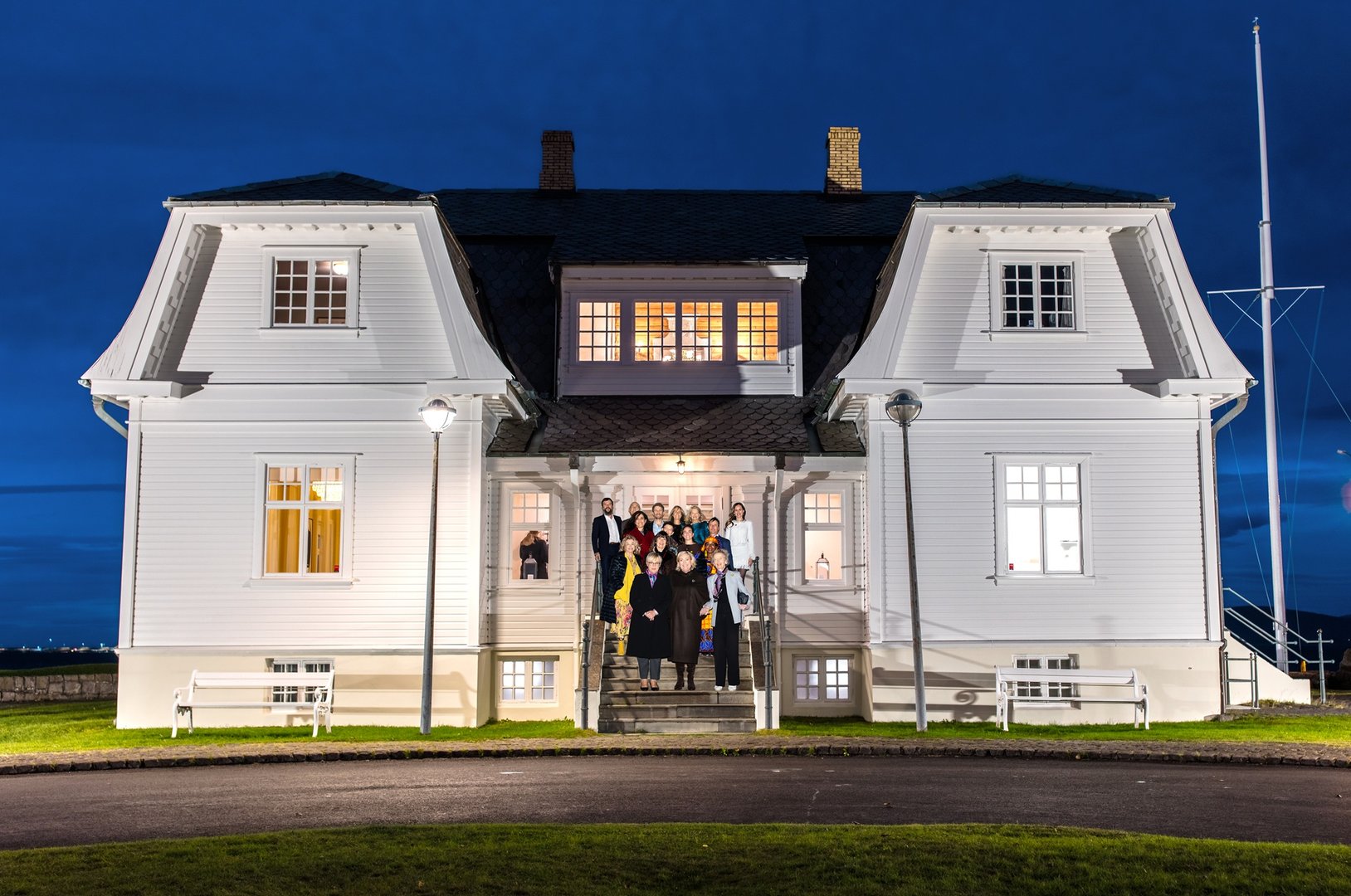
A Call for Responsible Leadership in Turbulent Times
A group of leaders takes part in a discussion at Höfði.
October 12, 2026
A Call for Responsible Leadership in Turbulent Times

October 11, 2026
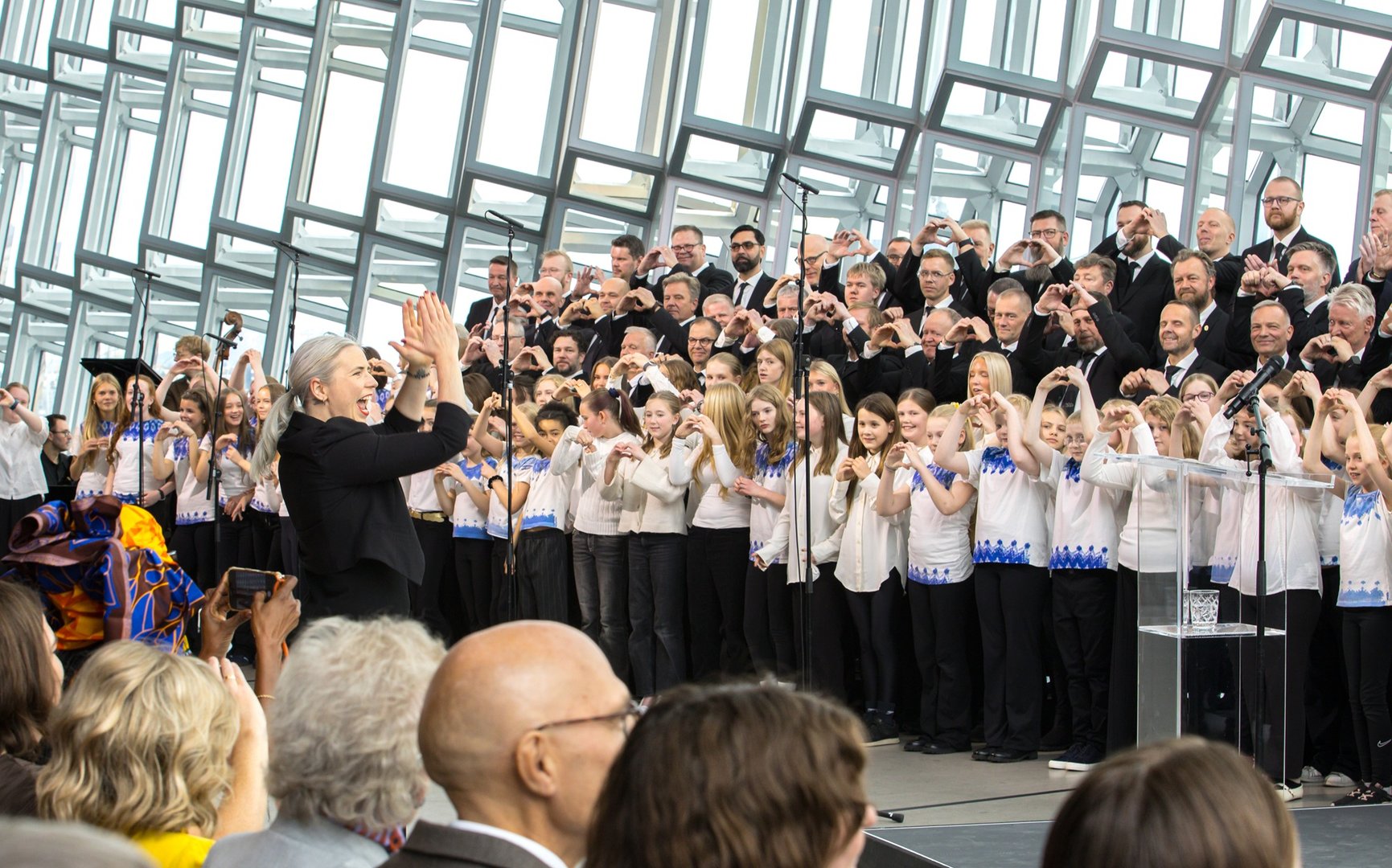
"And the World Will Live as One"
The President takes part in the closing event of "Samtal".
October 11, 2026
"And the World Will Live as One"